


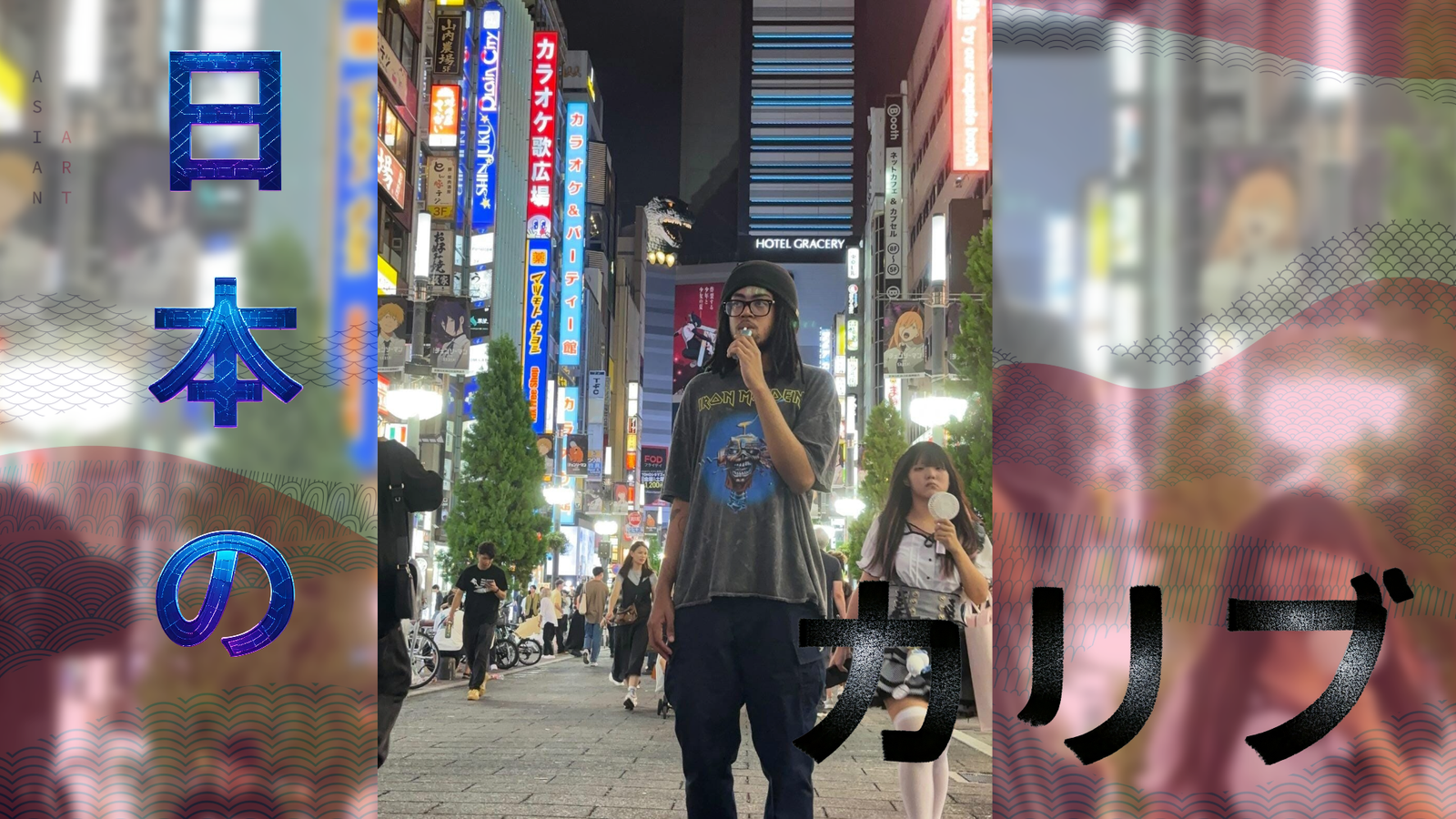


Some of my earliest memories of Trinidad & Tobago aren’t visual—they’re musical. The melodies of commercial vehicles drifting through the neighbourhood still live in my head: the bread vans, the ice cream trucks, that one scrap iron guy whose tune somehow cut through everything else. Those sounds were part of the rhythm of daily life, and in many ways, they shaped how I understand community and familiarity.
Before I moved, Japan represented one thing above all else: drastic change. Everything about it felt fundamentally different from Trinidad—the food, the culture, the weather, even the way people occupied space. That contrast wasn’t intimidating to me; it was the appeal. I wanted to experience something truly alien, something that would force me to unlearn habits I didn’t even realize I had.
Pop culture definitely played a role in drawing me here, but so did practicality. Japan offered opportunities—financial and professional—that simply weren’t available to me back home. The idea of earning a higher salary while immersing myself in a culture so different from my own made the decision feel like a challenge worth taking on.

My first real culture shock came almost immediately, and it’s one people often joke about: Japan is incredibly clean, yet public trash cans are almost nonexistent. They’re few and far between, and most stores don’t have them either. Convenience stores like 7-Eleven do, but if you miss that chance, you’re probably carrying your trash around until you get back home. It sounds small, but it perfectly captures how Japan functions—orderly, disciplined, and built on unspoken rules everyone somehow agrees to follow.

That sense of structure extends into social life as well. The hardest thing for me to adjust to has been the level of formality that permeates most interactions. Japanese has clear distinctions between casual and formal speech, and I still catch myself using casual language when I shouldn’t. Back home, communication is more fluid. Here, how you say something matters just as much as what you say.
People often ask if there are similarities between Trinidadian and Japanese culture. Honestly, I can’t think of many—except maybe an unexpected shared love for KFC. Beyond that, the differences are stark, and I felt them most strongly when I first arrived in my small town. Walking into local bars or restaurants felt surreal; I was treated like a celebrity simply because they hadn’t seen a foreigner in years. I stood out in every possible way. Over time, though, familiarity softened that feeling. The same shop owners who once stared began greeting me like an old friend. We built relationships, and suddenly I wasn’t just “the foreigner” anymore—I was Joshua.
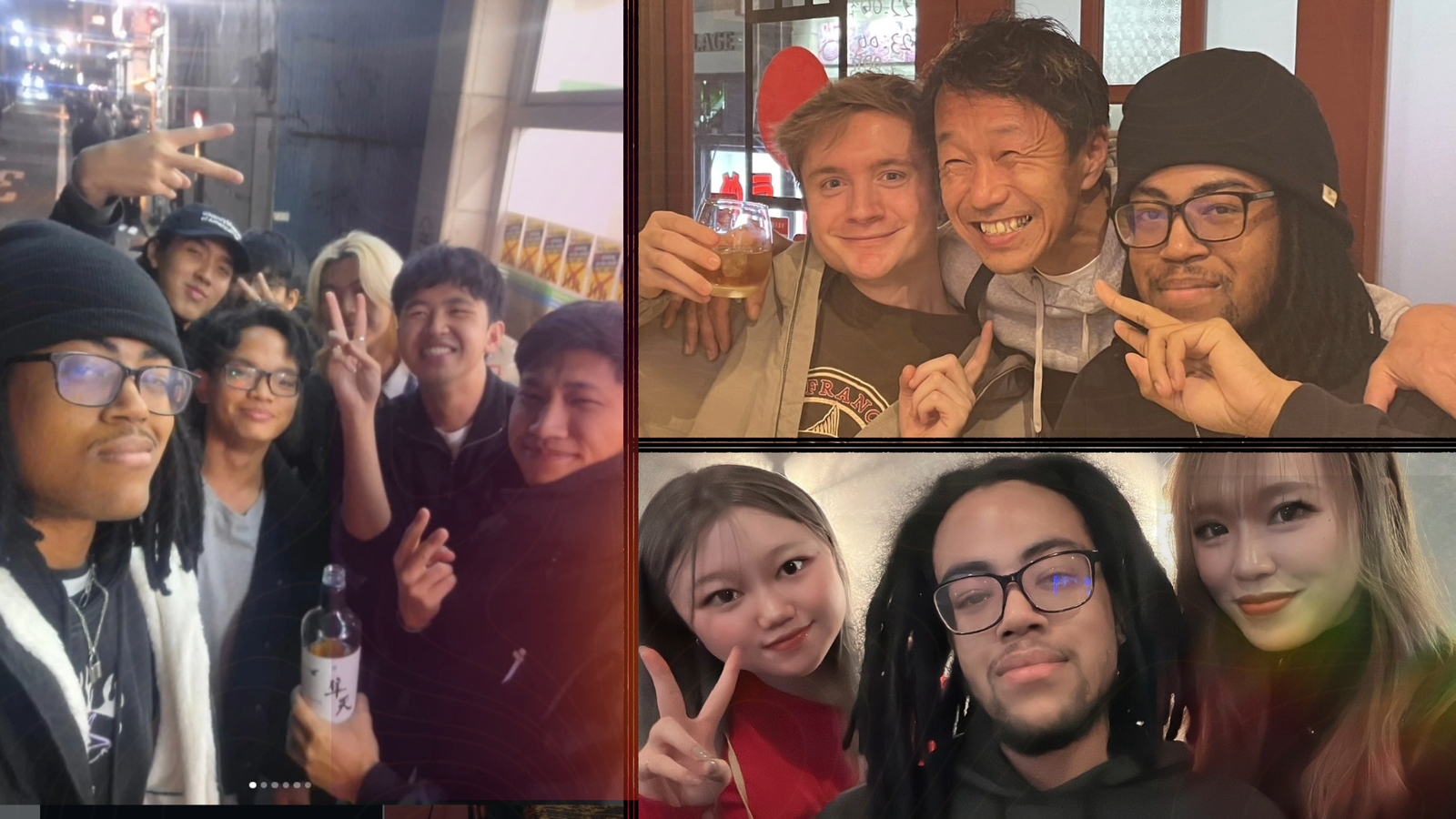
Living in Japan has also changed how I see Trinidad & Tobago. One thing that stands out is how Japan prioritizes collective wellbeing. Certain systems here work because people think beyond themselves. Trinidad could benefit from being a little less individualistic at times—considering how actions affect the wider community, not just personal convenience.
Distance has also sharpened my appreciation for what I left behind. Food, especially, and Carnival. There’s nothing quite like doubles or Trinidadian-style curry. Japan has its own curry, and there are Indian restaurants too, but none of them compare to the Trini version. Food carries memory, and some flavours just don’t travel well.
Japan, on the other hand, has changed me in very concrete ways. Punctuality is non-negotiable here. There’s no such thing as being fashionably late—people will genuinely be offended if you don’t show up on time or fail to keep commitments. Back home, I was guilty of arriving “whenever.” That mindset is long gone.
When I tell people I’m from Trinidad & Tobago, most have never heard of it. Those who have usually know little beyond the name. But almost everyone is curious. I’m often the first Trinidadian they’ve ever met, and because of that, there’s an unspoken responsibility. For many Japanese people, I may be their only reference point for my country, so I feel a duty to make that interaction a positive one.
Language has been central to my sense of belonging. Japan has one of the lowest English-speaking rates in the world, and being able to communicate in Japanese opens doors that would otherwise remain firmly shut. It’s not just about practicality—it’s about respect.
I’ve shared bits of Trinidadian culture where I can. On my first day at work, I introduced my coworkers to Carnival. One of them now plans to visit Trinidad someday just to experience it. That meant a lot to me, especially knowing that even though there’s a Trinidad-based Carnival in Tokyo every September, many locals don’t even know it exists.
When I learned that Trinidad & Tobago now has a Japanese embassy, I was pleasantly surprised. I actually visited it twice during my visa process and assumed it had always been there. It’s a beautiful building, and realizing it was new made the growing relationship between the two countries feel suddenly tangible.
From where I stand, the strongest cultural overlaps lie in nightlife and beach culture—places where people let their guard down and just enjoy being alive. And no matter how long I live here, “home” will always be Trinidad & Tobago. Japan doesn’t allow dual citizenship, but even if it did, some ties are permanent.
Looking ahead, I hope this growing Trinidad–Japan relationship leads to more cultural exchange—especially through food. I’d love to see Trinidadian cuisine take root here someday. And back home, I’d love to see Japanese restaurants that go beyond sushi and ramen. There’s so much more to Japanese food—takoyaki, udon, yakitori, omuraisu—that people in Trinidad rarely get to experience.
Cultural exchange isn’t just about embassies and diplomacy. Sometimes, it starts with a meal, a conversation, or a single person willing to carry their home with them halfway across the world.







This is such a great perspective, would love to hear more in the future!